
Kansas early voters went from R+3 in 2022 to D+5 this year
Republicans led at this stage in 2022 and 2024. This year, registered Democrats are ahead by D+5.2, with Johnson County supplying nearly half the early ballots.
Registered Democrats have cast more early ballots than registered Republicans in Kansas. Eight days before Election Day, they lead by D+5.2.
Republicans were ahead at the same point in both 2022 and 2024. In the last midterm, their lead was about R+3.
Johnson County, where Democrats have overtaken Republicans among early voters, accounts for much of the statewide change.
Real data · Oct 26, 2026
Registered Democrats lead by 5.2 points. Republicans led in 2022 and 2024.Party-registration margin, eight days before Election Day
2026: D+5.2 · registered-party margin among early voters
Source: Carmena’s Overton; early votes via ColdSpark. Caveat: Registered party, not vote choice. Eight days out in each year.
Data table
| Election | Early votes, eight days out | Democrats | Republicans | Unaffiliated and other | Margin | Date |
|---|---|---|---|---|---|---|
| 2022 | 135670 | 57281 | 61937 | 16452 | R+3.4 | Oct 31, 2022 |
| 2024 | 301864 | 103852 | 148316 | 49696 | R+14.7 | Oct 28, 2024 |
| 2026 | 203818 | 89923 | 79331 | 34564 | D+5.2 | Oct 26, 2026 |
Share figureDownload CSV JSON CC BY 4.0, free to use with credit
A close Senate race
Adam Hamilton, the Democratic nominee for Senate, needs Republican votes to win, and he says so.
“I’ll only get elected with Republicans voting for me,” the pastor told ABC News this month.1
Johnson and Sedgwick
Johnson County, Kansas City’s suburbs on the Kansas side of the state line, casts about a quarter of the state’s ballots. Its residents vote early more than most Kansans, so it has supplied about 45% of this year’s early count. The Democrats’ nominees for Senate and governor are both based there. Hamilton founded the Church of the Resurrection in Leawood,1 and Cindy Holscher, the nominee for governor, represents Overland Park in the state Senate.2
At this stage of the last midterm, Johnson’s early voters leaned Republican by about R+3 points. This year they lean Democratic by about D+10.
Sedgwick, the second-largest county, is moving slightly the other way. Its early voters, around Wichita, lean Democratic by about D+6, down from D+8 at this stage in 2022. Sedgwick cast about one in six ballots in 2024 but has supplied only about 11% of this year’s early ones, so its shift counts for less in the early tally than it may in the final count.
Elsewhere the movement runs toward Democrats. Riley, home to Kansas State University, has gone from a Republican early-voter lead to a Democratic one, and across the remaining covered counties the Republican lead has narrowed to R+2.5.
Real data · Oct 26, 2026
Compared with the same point in 2022, Johnson’s early voters have gone from a Republican lead to a Democratic one.Johnson County: early-voter party balance, 2026 D+10.1 · 2022 R+3.2, eight days out in both years
- 2026 early voters
- 2022 early voters, same point
- Johnson
- Sedgwick
- Shawnee
- Riley
- Rest of Kansas
Source: Carmena’s Overton; early votes via ColdSpark. Caveat: Registered party, eight days out. Rest of Kansas combines the other 98 counties. Bar colors mark counties, not parties.
Data table
| County | 2026 margin | 2022 margin | 2026 early votes | 2026 registered Democrats | 2026 registered Republicans | 2026 unaffiliated and other | 2022 early votes | 2024 margin | 2024 early votes | 2022 share of statewide early ballots | 2024 share of statewide early ballots | 2026 share of statewide early ballots | County final ballots, 2024 | Statewide final ballots, 2024 | County share of final ballots, 2024 | Covered statewide early ballots, 2026 | Johnson and Sedgwick final ballots, 2024 | Johnson and Sedgwick share of final ballots, 2024 |
|---|---|---|---|---|---|---|---|---|---|---|---|---|---|---|---|---|---|---|
| Johnson | D+10.1 | R+3.2 | 92721 | 42951 | 33598 | 16172 | 56029 | R+7.9 | 121897 | 41.3% | 40.4% | 45.5% | 348594 | 1343020 | 25.955979806704292% | 203818 | 565215 | 42.08537475242364% |
| Sedgwick | D+5.9 | D+8.3 | 22469 | 9763 | 8430 | 4276 | 14136 | R+13.8 | 35817 | 10.4% | 11.9% | 11% | 216621 | 1343020 | – | 203818 | – | – |
| Shawnee | D+12.7 | D+9.8 | 10827 | 5149 | 3773 | 1905 | 8042 | R+5.6 | 16560 | 5.9% | 5.5% | 5.3% | 82702 | 1343020 | – | 203818 | – | – |
| Riley | D+9.3 | R+2.5 | 4261 | 1920 | 1525 | 816 | 2720 | R+5.4 | 6517 | 2% | 2.2% | 2.1% | 24670 | 1343020 | – | 203818 | – | – |
| Rest of Kansas | R+2.5 | R+8.6 | 73540 | 30140 | 32005 | 11395 | 54435 | – | – | – | – | 36.08120970669911% | – | – | – | 203818 | – | – |
Share figureDownload CSV JSON CC BY 4.0, free to use with credit
Reliable voters
Most of this year’s early voters have voted many times before. About three in four cast ballots in each of the last four general elections. At this point in 2022, those reliable voters leaned Republican, at R+9.6. This year they lean Democratic, at D+2.9.
Early voters with no recorded vote in any of the last four general elections lean much further toward Democrats, at D+24.9. They make up about 3% of the early count, so they add little to the statewide lead.
Real data · Oct 26, 2026
Early voters who cast ballots in all four recent general elections went from R+9.6 to D+2.9. Voters with no recent record are about 3% of the early count.Voted in all four recent general elections: 2026 D+2.9 · 2022 R+9.6 · 73.8% of this year’s early ballots
- 2026 early voters
- 2022 early voters, same point
Source: Carmena’s Overton; early votes via ColdSpark. Caveat: Groups count how many of the last four general elections each voter cast a ballot in. “None” is not the same as first-time.
Data table
| Voted in previous four generals | 2026 margin | 2022 margin | 2026 share of early ballots | 2022 share of early ballots | 2026 early ballots | 2022 early ballots | 2026 registered Democrats | 2026 registered Republicans | 2026 other | 2022 registered Democrats | 2022 registered Republicans | 2022 other |
|---|---|---|---|---|---|---|---|---|---|---|---|---|
| All four | D+2.9 | R+9.6 | 73.8 | 66.0 | 148811 | 88941 | 67753 | 63447 | 17611 | 36396 | 44909 | 7636 |
| Three of four | D+5.5 | D+3.5 | 12.5 | 15.6 | 25190 | 21000 | 10549 | 9161 | 5480 | 9389 | 8663 | 2948 |
| Two of four | D+13.6 | D+10.8 | 5.7 | 7.3 | 11467 | 9866 | 4826 | 3270 | 3371 | 4620 | 3551 | 1695 |
| One of four | D+17.6 | D+13.2 | 4.7 | 7.3 | 9480 | 9831 | 3919 | 2249 | 3312 | 4520 | 3222 | 2089 |
| None of the last four | D+24.9 | D+15.6 | 3.4 | 3.8 | 6783 | 5131 | 2956 | 1268 | 2559 | 2329 | 1530 | 1272 |
Share figureDownload CSV JSON CC BY 4.0, free to use with credit
Roger Marshall and rural Kansas
“What I see across the state is Republicans coming home,” Sen. Roger Marshall (R), whom Hamilton is challenging, told ABC News.1
In fully rural counties, early voters lean about as Republican as they did four years ago. Their participation has been slower than in the cities and suburbs: about 6% of registered voters have voted early, against about 13% in urban and suburban counties.
Real data · Oct 26, 2026
Rural early voters remain heavily Republican. Urban and suburban voters are arriving faster.Urban and suburban counties: about 13% of registered voters have voted early, against 9% at this point in 2022
- 2022 at the same point
- 2026, eight days out
Source: Carmena’s Overton; early votes via ColdSpark, county types via L2. Caveat: County type by rural share: under 50% urban/suburban, 50–99% mostly rural, 100% fully rural.
Data table
| County type | 2026 turnout so far | 2022 turnout at this point | 2026 margin | 2022 margin | Counties | 2026 early votes | 2022 early votes | 2022 registered voters | 2026 registered voters |
|---|---|---|---|---|---|---|---|---|---|
| Urban and suburban | 13.3% | 8.9% | D+12.1 | D+3.8 | 11 | 166873 | 106538 | 1191728 | 1257709 |
| Mostly rural | 6.2% | 5% | R+19.4 | R+26.9 | 23 | 14987 | 11637 | 232733 | 242803 |
| Fully rural | 5.8% | 4.6% | R+30.6 | R+31.7 | 68 | 21958 | 17187 | 372146 | 380096 |
Share figureDownload CSV JSON CC BY 4.0, free to use with credit
Around Wichita, Sedgwick voters have made different choices across the same ballot. They helped reelect Democratic Gov. Laura Kelly and Republican Sen. Jerry Moran in 2022. Together, Johnson and Sedgwick supplied more than two in five of Kansas’s ballots in the last presidential election. Candidates seeking support across party lines have a substantial share of the statewide electorate to contest in those counties.
The remaining vote
Most Kansans have yet to vote. In the last midterm, about 4 in 10 ballots were cast early, by mail or in person; the rest came on Election Day. The early share has been higher in presidential years, reaching about half in 2024.
This year, Kansans had cast about half again as many early ballots by eight days out as at the same point in 2022. If total turnout ends near 2022’s, early voters will make up a larger share of the final count than they did then.
Democrats have gained most in the cities and suburbs, where both their statewide nominees are based.
The Democratic lead has already shrunk from about D+15 two weeks before Election Day to about D+5 now. Republicans gained late in 2022, as more people voted in person.
Real data · Oct 26, 2026
A repeat of 2022’s late shift would still leave a less Republican early electorate.8 days out: 2026 D+5.2 · 2022 R+3.4 · 2024 R+14.7
- 2026
- 2022
- 2024
- Dotted: repeat the remaining 2022 shift; not a forecast
Source: Carmena’s Overton; early votes via ColdSpark. Caveat: Dotted line: this year’s margin plus 2022’s late shift. An illustration, not a forecast.
Data table
| Days before Election Day | 2026 margin | 2022 margin | 2024 margin | 2026 early votes | 2022 early votes | 2024 early votes | Hypothetical 2026 early margin if the remaining 2022 shift repeats | 2022 registration-margin change from eight days out to day zero |
|---|---|---|---|---|---|---|---|---|
| 14 | D+15.3 | R+6.2 | R+10.5 | 55321 | 27226 | 64405 | – | – |
| 13 | D+11.3 | R+6.8 | R+11.6 | 90993 | 48642 | 116397 | – | – |
| 12 | D+8.4 | R+4.6 | R+12.9 | 122041 | 73310 | 166102 | – | – |
| 11 | D+6.3 | R+2.6 | R+12.9 | 153737 | 92478 | 166102 | – | – |
| 10 | D+6.3 | R+2.6 | R+12.9 | 153737 | 92478 | 166102 | – | – |
| 9 | D+6.3 | R+2.6 | R+12.9 | 153737 | 92478 | 166102 | – | – |
| 8 | D+5.2 | R+3.4 | R+14.7 | 203818 | 135670 | 301864 | – | – |
| 7 | – | R+3.6 | R+14.6 | – | 167488 | 339992 | – | – |
| 6 | – | R+6.1 | R+15.3 | – | 205717 | 391768 | – | – |
| 5 | – | R+8 | R+16.7 | – | 244731 | 453168 | – | – |
| 4 | – | R+9.4 | R+17.7 | – | 282475 | 516864 | – | – |
| 3 | – | R+10.8 | R+18.3 | – | 324222 | 576697 | – | – |
| 2 | – | R+10.8 | R+18.3 | – | 324222 | 576697 | – | – |
| 1 | – | R+10.7 | R+18.1 | – | 352868 | 653157 | – | – |
| 0 | – | R+11.8 | R+18.5 | – | 387668 | 694959 | R+3.1 | −8.326400354186617 |
Share figureDownload CSV JSON CC BY 4.0, free to use with credit
A late swing as large as 2022’s would still leave this year’s early electorate far less Republican than in 2022 or 2024.
Beyond the party label
Every count in this article is of registered parties, and Kansans do not always vote with theirs. In Johnson, registered Republicans outnumbered registered Democrats among 2024 voters by R+10.4. Harris won the county by D+8.5.
Real data · Apr 2, 2025
Republicans outnumbered Democrats among Johnson’s 2024 voters by about 10 points. Harris won the county by about 8.Source: Carmena’s Overton; 2024 turnout via Redistricting Data Hub / L2. Caveat: Party from an April 2025 voter file covering 99% of ballots. Individual crossover voters cannot be identified.
Data table
| Population or race | Measure | Democratic voters or candidate votes | Republican voters or candidate votes | Other voters or candidate votes | Denominator | D minus R margin |
|---|---|---|---|---|---|---|
| Johnson: voters by registered party | Recorded 2024 voters, all voting methods; party as of April 2, 2025 | 116441 | 152273 | 76355 | 345069 | R+10.4 |
| Johnson: final presidential result | Certified 2024 presidential votes, all voting methods | 183451 | 154247 | 6082 | 343780 | D+8.5 |
Share figureDownload CSV JSON CC BY 4.0, free to use with credit
Brent Smith, a Lenexa voter, described his own split ticket to the Kansas Reflector in 2024. The fiscally conservative independent said he had voted for Harris for president and Republicans for Congress and the Legislature.3,4 Hamilton is asking Republicans to split their tickets the other way in the Senate race.1
Sources
Early-vote, turnout and election-result analysis by Carmena’s Overton. Brent Smith’s account of his vote was reported by the Kansas Reflector; Hamilton’s and Marshall’s comments were reported by ABC News; Holscher’s background was reported by KCUR.
- ABC News, Hamilton’s cross-party appeal and Marshall’s campaign (Oct 15, 2026)
- KCUR, Kansas governor candidates and background (Oct 14, 2026)
- Kansas Reflector, Brent Smith’s split ticket (Nov 5, 2024)
- Hutch Post, republication of the Kansas Reflector voter interviews
Methods: how we source, label and check data.
Registered party
Registration is not a vote for a candidate
Party labels in these counts come from voter registration. Ballots are secret; a registered Democrat can vote Republican, and vice versa.
In this article
The early-vote lead describes the party balance of people who voted, not a reported candidate result.
Johnson County
Kansas · Kansas City suburbs
This largely suburban county includes Overland Park, Olathe and Leawood, along the Missouri border.
In this article
Registered Democrats have overtaken Republicans among its early voters. Hamilton and Holscher are both based here.
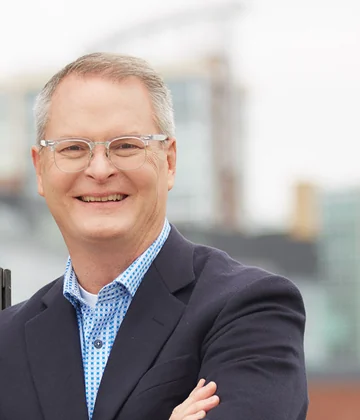
Adam Hamilton
Democrat · Kansas Senate nominee
A United Methodist pastor who founded the Church of the Resurrection in Leawood. He is running against Roger Marshall.
In this article
He says he needs Republican votes to win the Senate race.
Sources
Leawood
Johnson County, Kansas · Kansas City suburbs
A suburban city in Johnson County, on the Missouri state line south of Kansas City. It borders Overland Park.
In this article
Adam Hamilton founded the United Methodist Church of the Resurrection here.
Sources
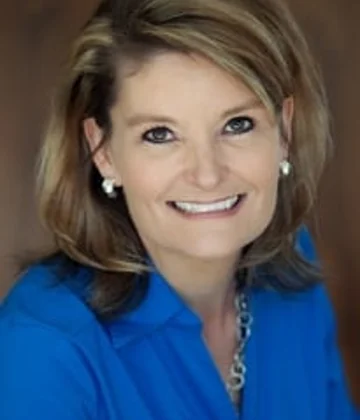
Cindy Holscher
Democrat · Kansas governor nominee
A state senator from Overland Park, in Johnson County.
In this article
The Democratic nominees for Senate and governor are both based in Johnson County.
Sources
Sedgwick County
South-central Kansas
This largely urban county includes Wichita and its surrounding communities.
In this article
Voters here helped reelect Democrat Laura Kelly and Republican Jerry Moran on the same ballot in 2022.
Riley County
Kansas · Manhattan area
This county combines urban Manhattan with rural areas. It is home to Kansas State University and part of Fort Riley.
In this article
Registered Democrats lead its early-voter count; Republicans led at the same point in the last midterm.
Reliable voters
Voted in the four preceding general elections
This article groups voters by participation in all four previous general elections. It describes a voting record, not a promise to vote again.
In this article
The comparison uses different groups in each cycle: participation in 2014–2020 for 2022, and 2018–2024 for 2026.
Sources
No recorded recent votes
Voting history is not the same as age or eligibility
No recorded vote in the four preceding general elections does not necessarily mean someone is a first-time voter. They may have voted before that period or have a history the source does not capture.
In this article
This group is separate from voters who participated in all four preceding elections.
Sources
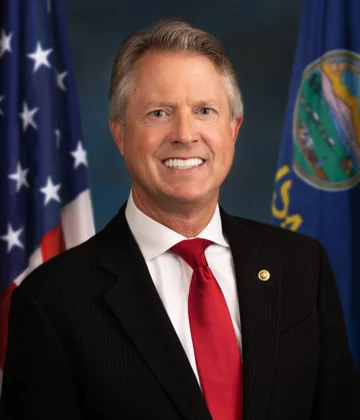
Roger Marshall
Republican · U.S. senator, Kansas
An obstetrician from Great Bend. He represented western Kansas in the U.S. House before his election to the Senate.
In this article
He says Republicans are “coming home” as he seeks reelection.
Sources
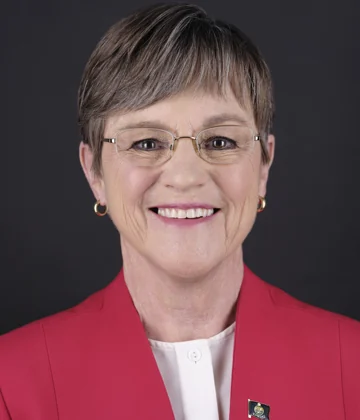
Laura Kelly
Democrat · Governor of Kansas
A former state senator from Topeka. She worked in recreation therapy before entering politics.
In this article
Sedgwick voters helped reelect her and Republican Jerry Moran on the same ballot in 2022.

Jerry Moran
Republican · U.S. senator, Kansas
He represented western Kansas in the U.S. House before his election to the Senate.
In this article
He won Sedgwick County on the same ballot as Democrat Laura Kelly in 2022.
Sources
Kamala Harris
Democrat · Presidential nominee in 2024
A former U.S. vice president and U.S. senator from California.
In this article
She won Johnson County despite a Republican registration advantage among its voters in the post-election turnout file.
Sources
Split ticket
Different parties on the same ballot
A voter chooses candidates from different parties for different offices in the same election.
In this article
The Kansas article describes voters supporting a Democratic candidate for one office and Republicans for others.
 Source 1 · ABC News
Democratic Senate candidate Adam Hamilton says he's fighting for the 'rights of all people'
Article or web page · Oct 15, 2026
ABC News, Hamilton’s cross-party appeal and Marshall’s campaign (Oct 15, 2026)
 Source 2 · KCUR
Kansas governor election: What to know about the candidates running in November
Article or web page · Oct 14, 2026
KCUR, Kansas governor candidates and background (Oct 14, 2026)
 Source 3 · Kansas Reflector
Kansas voters swarm polling locations with presidential contest, policy issues at forefront
Article or web page · Nov 5, 2024
Kansas Reflector, Brent Smith’s split ticket (Nov 5, 2024)
 Source 4 · Hutch Post
Kansas voters swarm polling locations with presidential contest, policy issues at forefront
Article or web page · Nov 5, 2024
Hutch Post, republication of the Kansas Reflector voter interviews
Get new posts by email. One post per email, with its chart and source.
Subscribe